
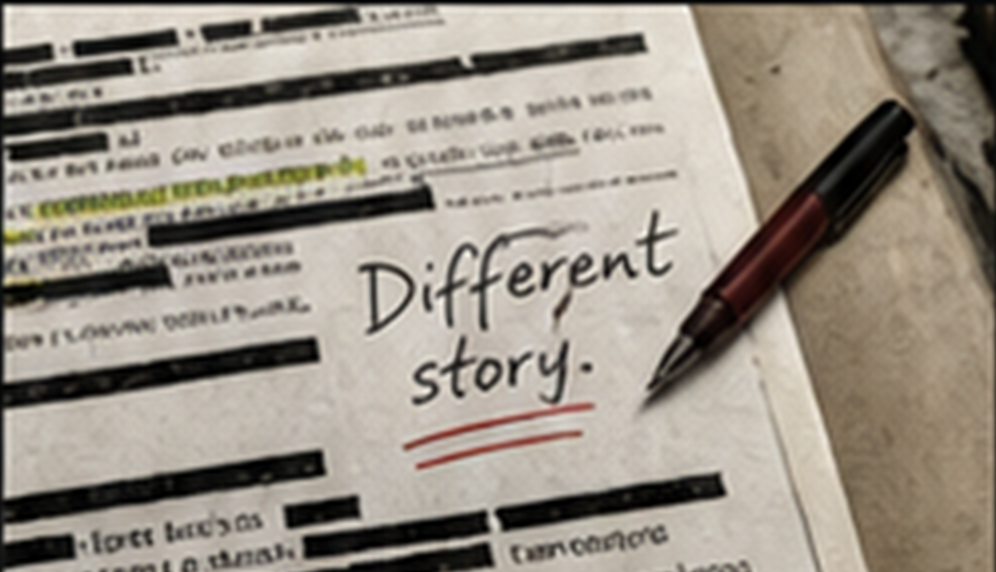
People remember events differently. This is normal. Dates, documents and archived statements can be annoyingly literal.
Footprint is interested in the space between what is said and what can be substantiated. Not because every contradiction is sinister. Some are mistakes. Some are poor record-keeping. Some are the result of somebody answering a different question from the one they were asked.
And some are very interesting indeed.
Put the facts in order
A useful investigation begins with a timeline. Public filings, published accounts, websites, social media, news reports, court or regulatory information where publicly available, and statements made by the people involved all have dates.
Placed separately, each item may be unremarkable. Placed together, twenty facts can become rather more conversational.
We then ask the obvious questions. What changed? Who knew? What was said at the time? What is being said now? Is there a document that supports either version?
Evidence before entertainment
Footprint can be sarcastic. The underlying information cannot be invented.
Where an allegation is serious, evidence matters. Where appropriate, the subject should have a fair opportunity to reply. If the response changes the facts, the article should change too. If it simply objects to the existence of the facts, that is less useful.
The aim is not to manufacture certainty. It is to show readers the source material, explain what it does and does not establish, and identify the questions still worth asking.
That may be less dramatic than accepting the best-told version of events. It is usually more revealing.